
China
Chinese philately features some of the world's most celebrated rarities, from the legendary Red Revenue provisional to the infamous Cultural Revolution error.
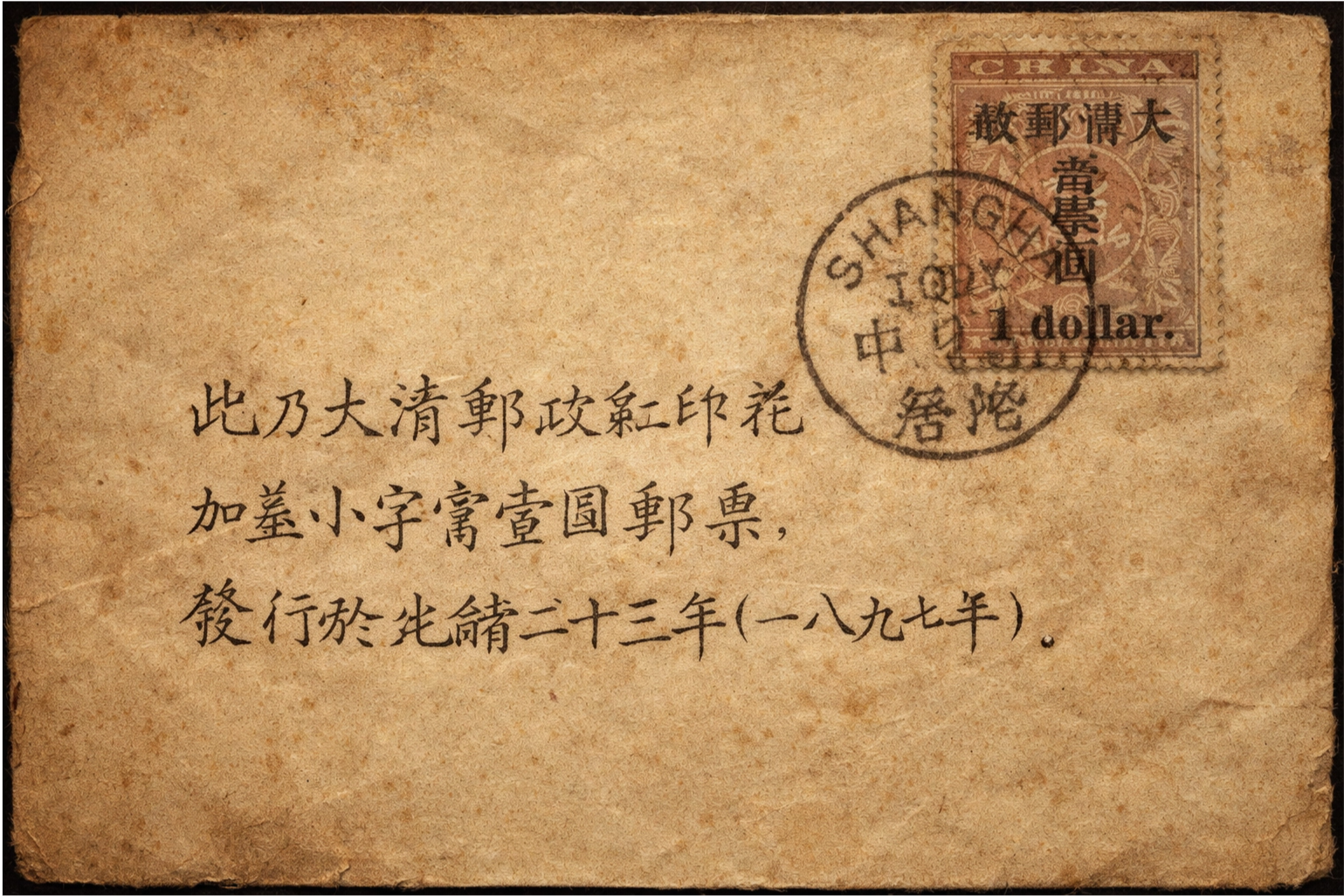
Red Revenue Small One Dollar
1897The "Red Revenue Small One Dollar" stands as one of the most iconic and sought-after stamps in all of Chinese philately. In 1897, during the late Qing Dynasty, postal authorities faced a shortage of regular postage stamps and made the extraordinary decision to surcharge revenue stamps for postal use. The Small One Dollar value, printed in distinctive red, was overprinted with Chinese characters authorizing its temporary use as postage. This emergency measure resulted in one of the rarest and most valuable stamps in Asian philatelic history. This exceptional cover bears the Red Revenue stamp tied with a clear period cancellation, demonstrating genuine postal usage during this transitional moment in China's postal system. The scarcity of surviving examples, combined with the stamp's striking appearance and dramatic backstory, has elevated it to legendary status among collectors worldwide. Examples on cover are extraordinarily rare, as most were removed by early collectors. This piece represents a tangible link to the final years of Imperial China and the evolution of its modern postal infrastructure. The Red Revenue Small One Dollar rivals the great rarities of world philately in terms of desirability, historical significance, and market value.
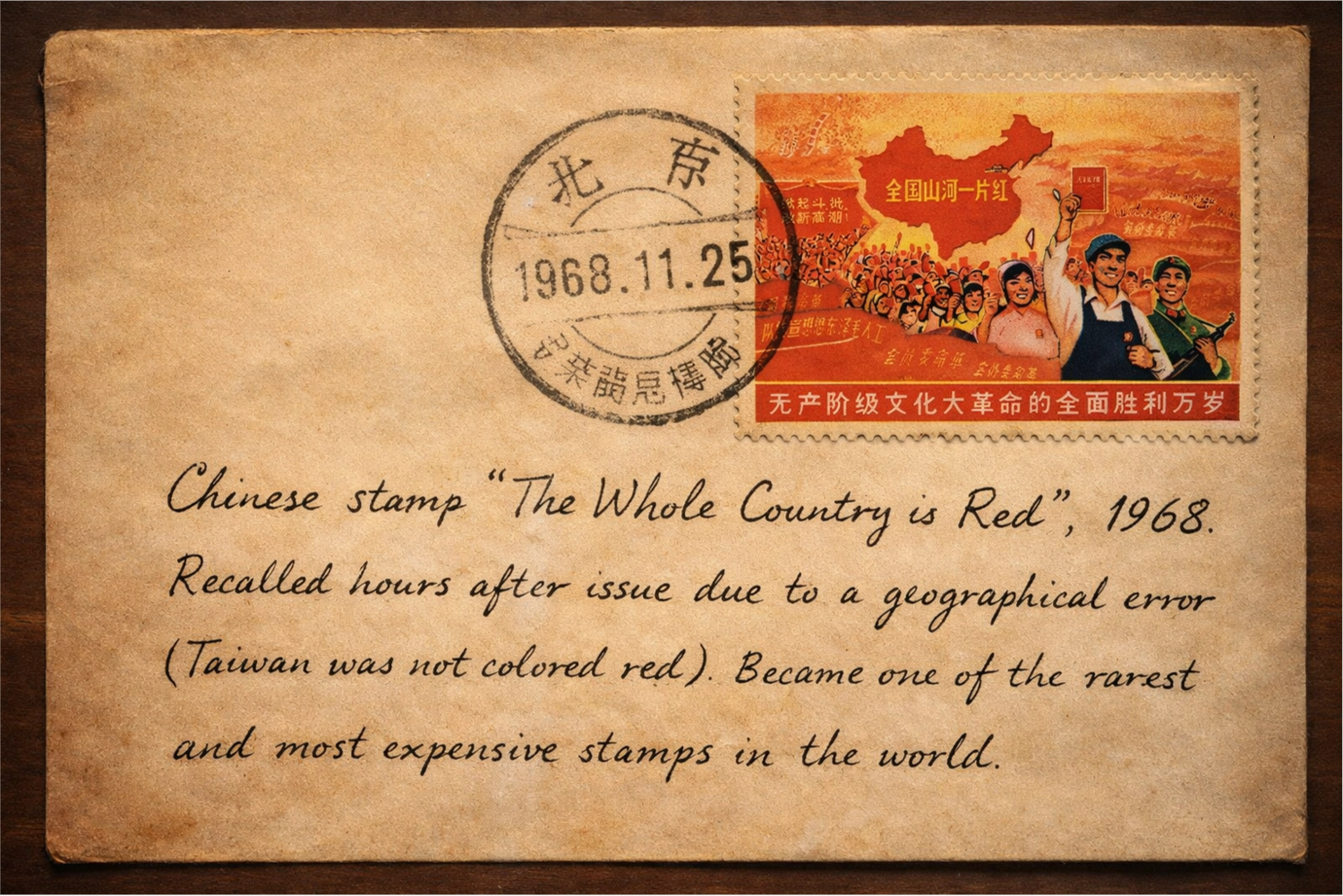
The Whole Country Is Red
1968This historic postal artifact features the infamous "The Whole Country Is Red" stamp, issued briefly in 1968 during the height of the Cultural Revolution. Designed to symbolize the ideological unity of the nation, the stamp depicts a bright red map of China held aloft by revolutionary workers and soldiers. However, within hours of its release, authorities discovered a critical geographical error: Taiwan was not colored red. This oversight was politically unacceptable, leading to an immediate nationwide recall. Almost all copies were withdrawn and destroyed, making surviving examples exceptionally rare. Authentic postal usage—especially on an original cover—is considered one of the highest tiers of rarity in modern Chinese philately. The cover bears a clear Beijing postmark dated 1968.11.25, placing it precisely within the narrow window of the stamp's accidental circulation. The accompanying text contextualizes the stamp's recall and its transformation into one of the most sought‑after Cultural Revolution rarities. As a combination of political symbolism, printing error, and rapid suppression, this piece stands as a museum‑grade artifact representing one of the most dramatic episodes in the history of Chinese postage stamps.