
Australia
Australian philately showcases the evolution from colonial states to federation, featuring iconic designs that captured the unique character of the continent.
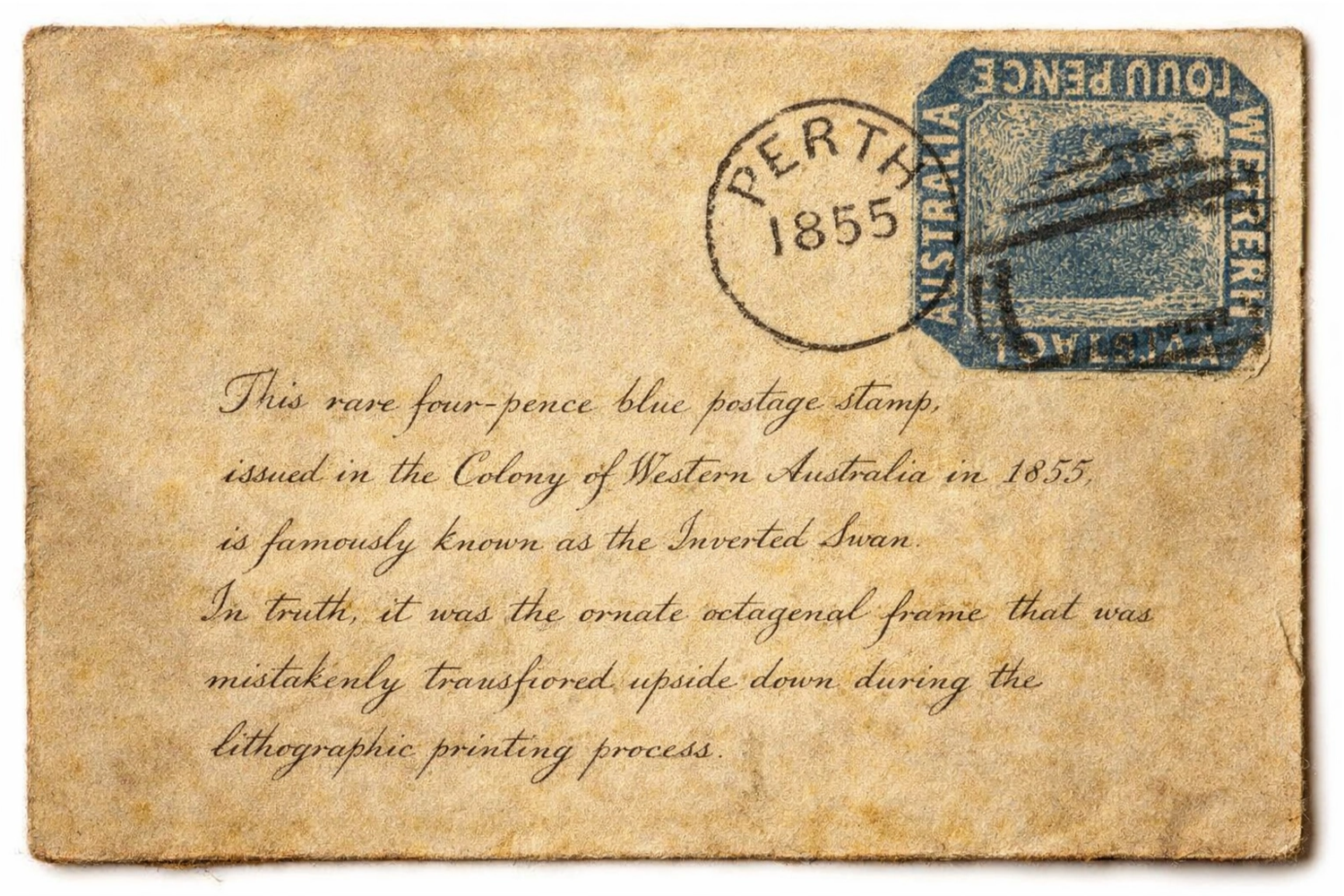
Inverted Swan Four Pence Blue
1855The Western Australia 1855 "Inverted Swan" Four Pence Blue represents one of the most visually dramatic stamp errors of the Victorian era. Issued during Western Australia's colonial period, these stamps featured the black swan — the iconic symbol of the territory. Due to a lithographic printing error, a small number of stamps were produced with the swan inverted within its decorative frame. The error went unnoticed until examples appeared in circulation, and today fewer than twenty examples are known to exist. This cover displays a magnificent strike of the swan printed upside-down against the blue background, with clear period cancellation marks placing it firmly in the mid-19th century frontier postal system. The Inverted Swan holds a special place in Australian philatelic history, representing both the challenges of colonial printing and the enduring appeal of unintentional varieties.
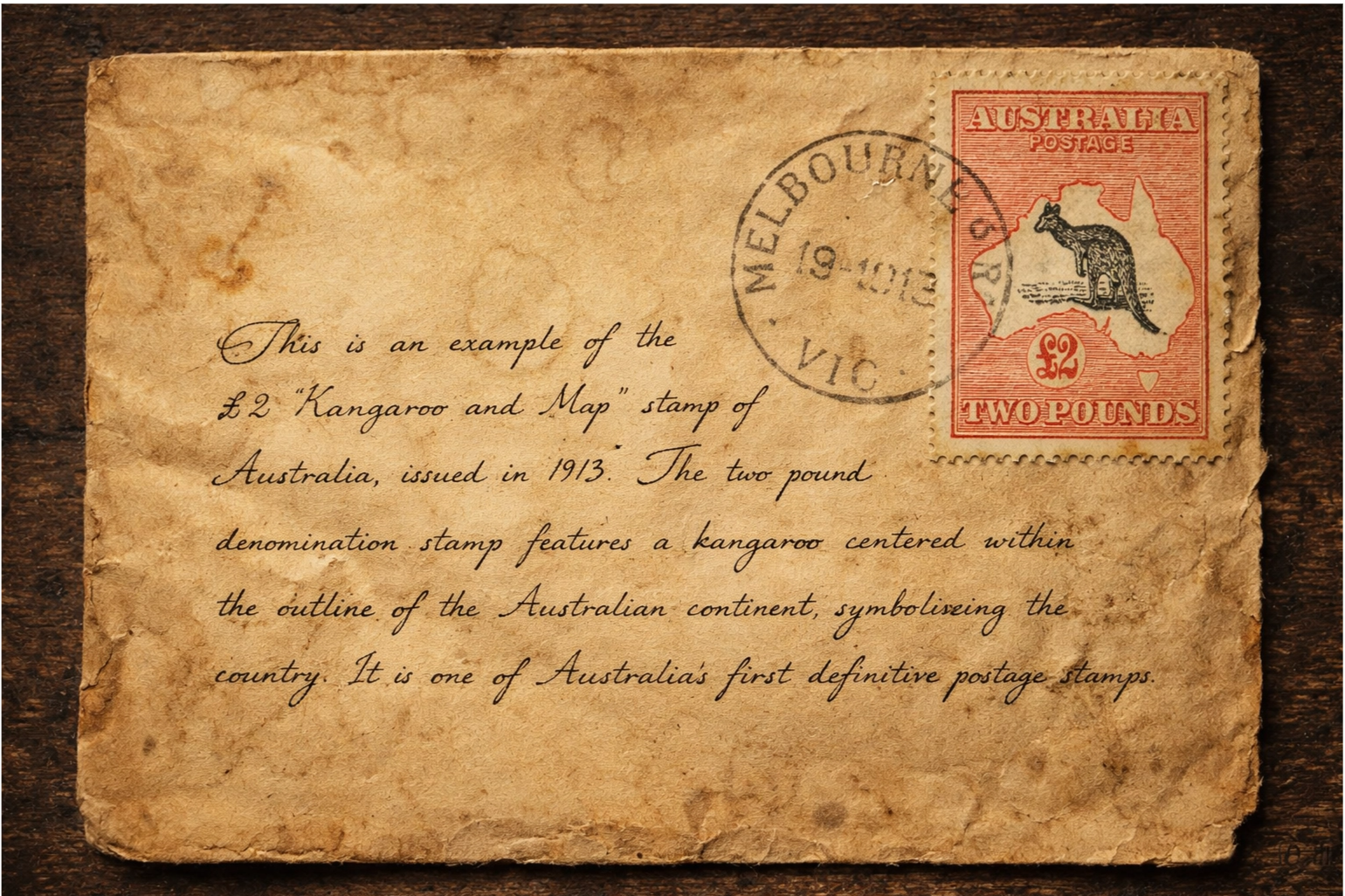
Kangaroo and Map £2
1913The Commonwealth of Australia's first stamp issue of 1913 featured the iconic "Kangaroo and Map" design, symbolizing the newly federated nation. The £2 denomination, printed in black and rose, represented the highest value in the series and was rarely used except for large parcels, international registered mail, and official government correspondence. This spectacular example bears a clear Melbourne cancellation from the inaugural year of issue, demonstrating genuine postal usage during the formative period of Australian nationhood. The kangaroo, positioned dynamically against an outline map of the continent, became one of the most recognizable and enduring images in philately. High-denomination Kangaroo stamps in fine used condition with clear postmarks are highly sought after, as most were either archived unused or damaged in transit. This piece represents not just postal history but Australia's declaration of identity as a unified commonwealth.