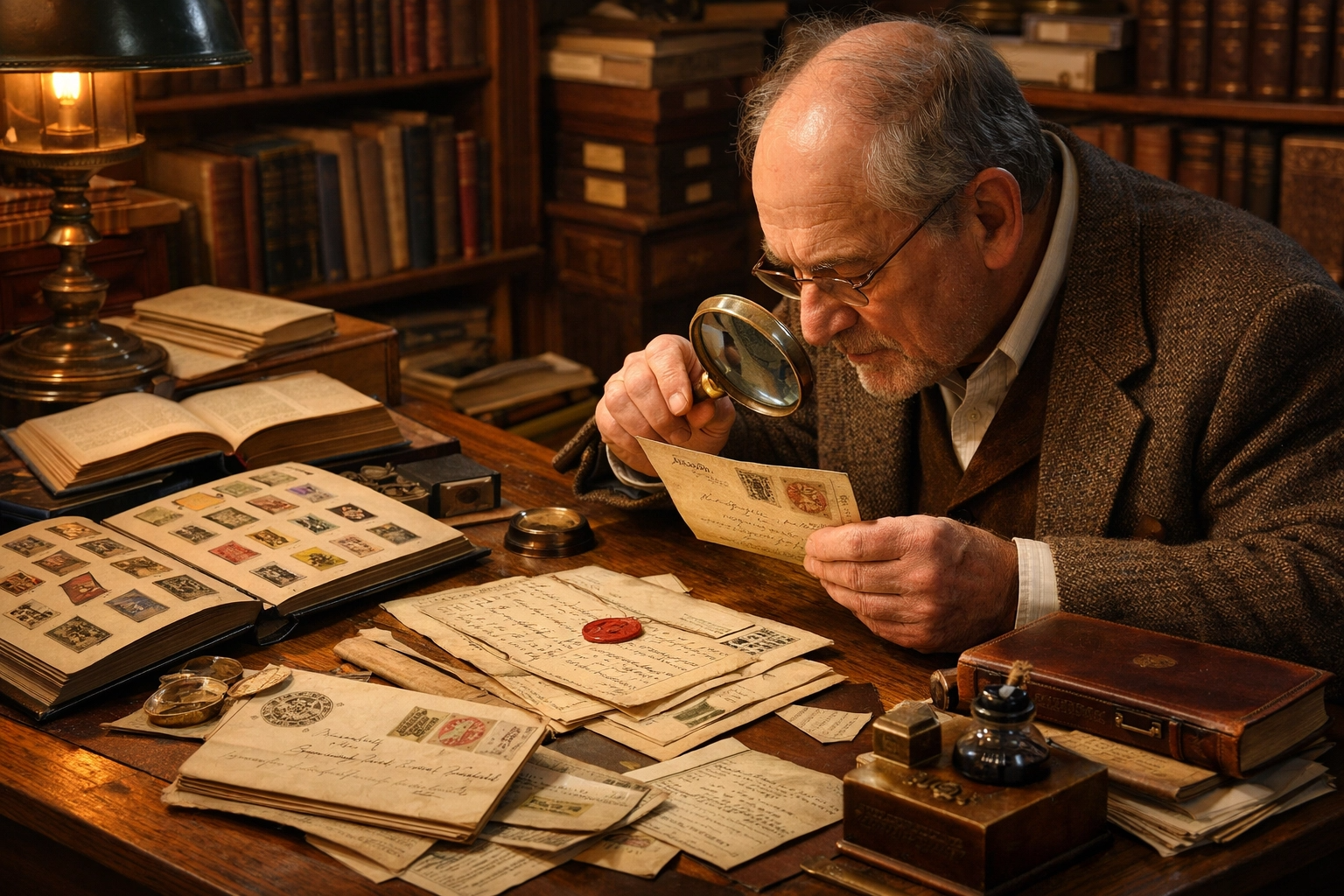
He was born in Ukraine — a land where history is never silent: it lives in the stones of ancient fortresses, in the breath of the steppes, in the voices of ancestors that echo through generations.
But life carried him to Europe, where he now lives and works. Every day begins at four in the morning, with the routine of a plumber's job — hard, honest work that leaves the body tired but the spirit unbroken.
And when others return home to rest, he returns to something greater.
After a brief pause, at eight in the evening, the light of his monitor turns on — and another life begins. A life where he is not just a worker, but a keeper of time. Where he does not simply create images, but revives forgotten epochs. Where he does not merely design stamps, but restores the fragile thread of human memory.
He sees what many overlook: how quickly the young generation loses its connection to the past, how easily centuries fade away, how silently tragedies, victories, and entire civilizations disappear.
And so he chose to do what only those who truly love history can do: to build a museum that will not allow it to vanish.
- • Each stamp is a small window into the past.
- • Each scene is a breath of an era brought back to life.
- • Each series is a bridge between what once was and what must never be forgotten.
He works until midnight, sometimes later. Not because he must — but because history does not tolerate indifference. If it is not preserved today, tomorrow may already be too late.
And so, in the quiet of the night, between a cup of tea and the glow of the screen, something is born that one day will be known as: "The Global Museum of Humanity — a digital archive of human memory, created by one man who refused to let history disappear."
This is not just a collection.
It is a vow.
It is a labor of the heart.
It is the path of a Ukrainian who, despite exhaustion, foreign lands, and daily burdens, preserves for the world what the world itself has forgotten to protect.