
Germany
1939-1945
Wehrmacht field post from World War II. Letters from German soldiers on the Eastern Front during the final years of the war. Written during the long retreat from Kursk through Ukraine, these letters reflect the collapse of German military ambitions. Field post marked with the stamps of disintegrating logistics systems and desperate defensive battles.
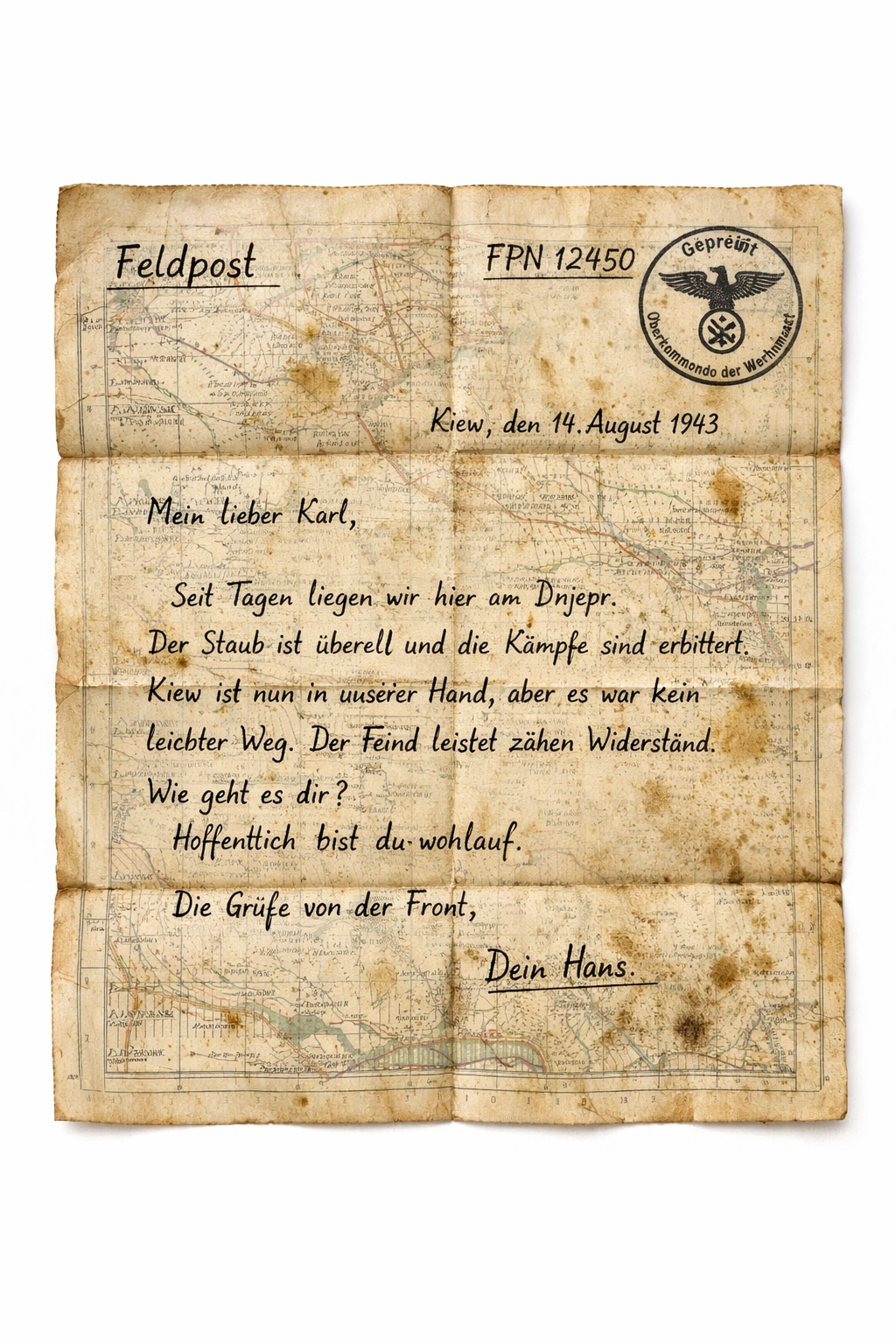
Letter From the Dnieper Front
1943This 1943 field‑post letter, written by a German soldier stationed near the Dnieper River, offers a strikingly personal perspective on the Eastern Front during one of the most intense phases of the Second World War. Sent from Kyiv on August 14, the document reflects the harsh conditions of the campaign, marked by dust, exhaustion, and continuous fighting.Bearing the field‑post number FPN 12450 and stamped by military censorship, the letter exemplifies the controlled communication system that governed wartime correspondence. The soldier’s message describes the difficult advance toward Kyiv, the fierce resistance encountered, and the emotional weight of prolonged combat. Despite the brevity of the text, it conveys a sense of fatigue, uncertainty, and concern for the well‑being of the recipient.The aged paper, authentic handwriting, and period‑accurate field‑post markings enhance the historical depth of the piece, transforming it into a compelling artifact of twentieth‑century military history. As a preserved fragment of personal frontline communication, the letter stands as a powerful testament to the human experience behind the broader events of the war.A historically resonant and emotionally charged document — ideal for collectors of wartime ephemera, military correspondence, and significant personal narratives from the Second World War.
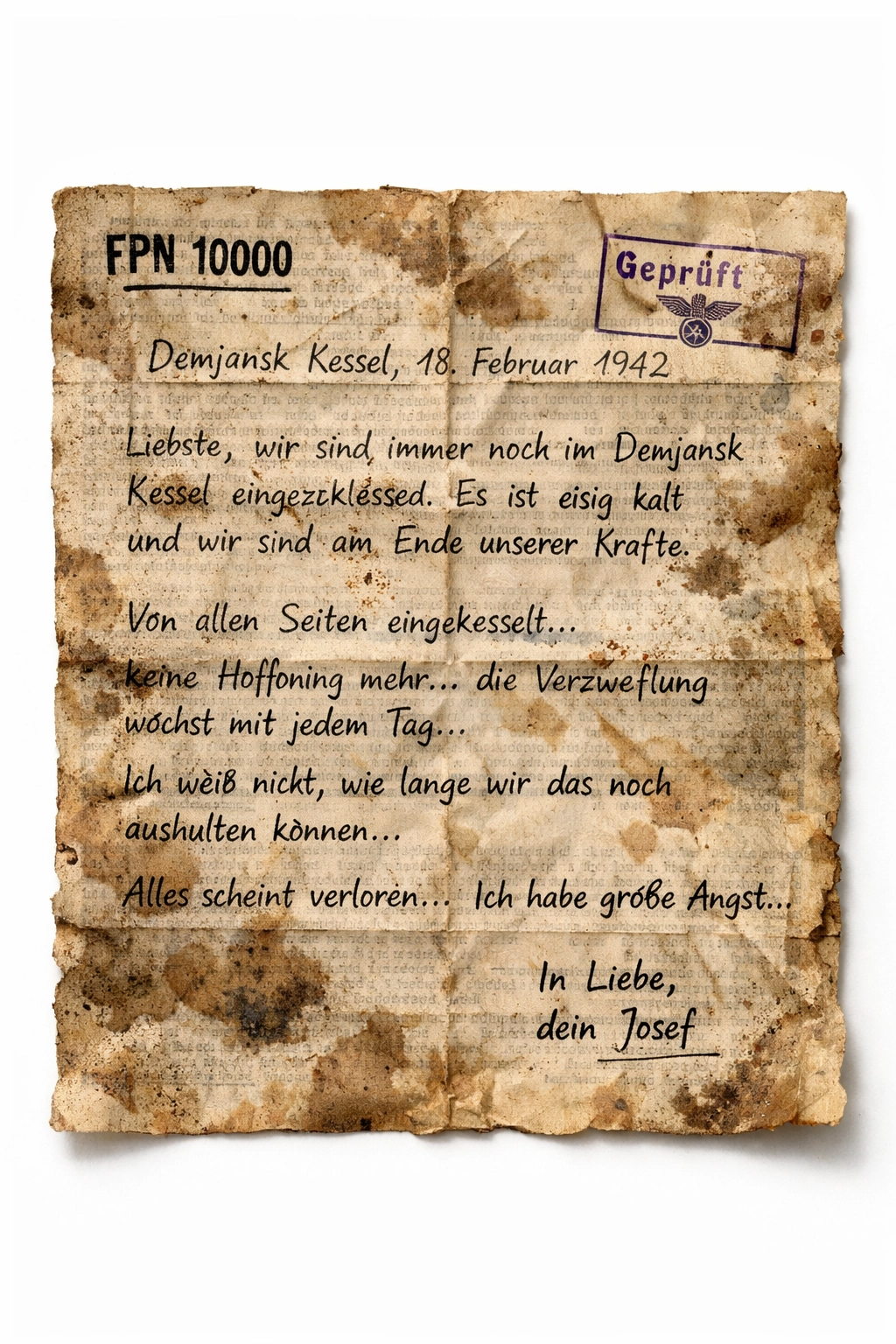
Fragmented Echoes of the Front
1943This field‑post letter, dated 18 February 1942 and marked with FPN 10000, originates from the Demjansk Pocket — one of the most brutal winter encirclements of the Second World War. Surrounded by Soviet forces, exposed to extreme cold, starvation, and constant artillery fire, the soldiers trapped inside endured conditions that pushed human endurance to its limits.Written by a man named Josef, the letter conveys exhaustion, fear, and the growing sense of hopelessness that defined the encirclement. His words — fragmented by despair yet addressed tenderly to his beloved — reflect the emotional collapse that often accompanied prolonged isolation and freezing temperatures. The worn, stained paper and the “Geprüft” censorship stamp reinforce the authenticity of a document that survived one of the harshest environments of the Eastern Front.As a historical artifact, this letter stands as a rare emotional testimony from within the Demjansk Kessel. Its combination of personal vulnerability, historical weight, and visual authenticity makes it a highly desirable piece for collectors of wartime correspondence and significant frontline relics.