
USSR
1941-1945
Red Army field post from the Great Patriotic War. Letters written during the most decisive battles on the Eastern Front—Kursk, Stalingrad, the defense of Moscow. Soldiers writing between artillery barrages, during brief respites in brutal combat. These letters carry the distinctive markings of Soviet military censors and field post stations that moved with advancing and retreating armies.
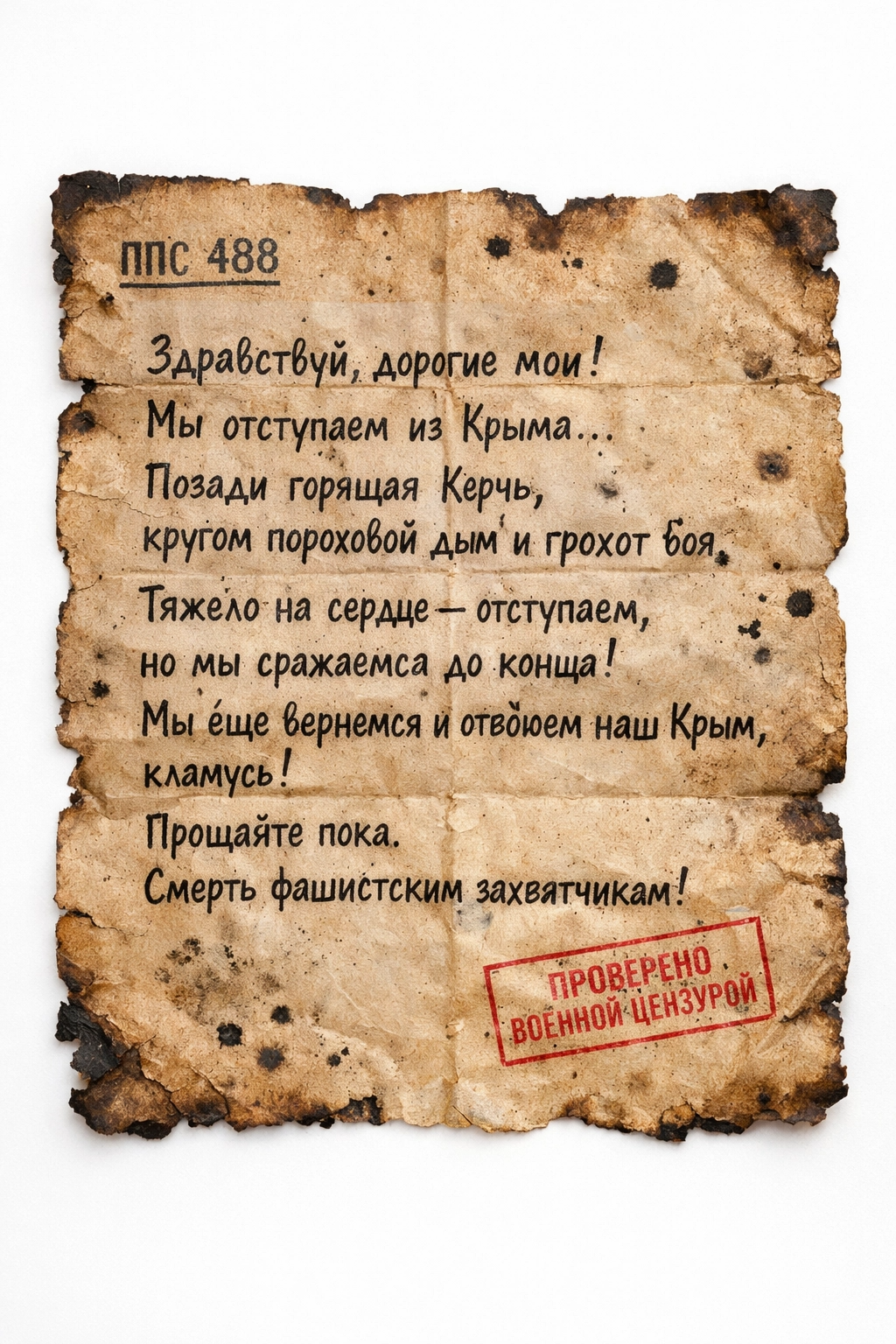
Letter Through Smoke and Ash
1942This wartime letter, marked with PPS 488 and stamped by Soviet military censorship, originates from the dramatic retreat from Crimea in 1942. Written as Kerch burned behind the withdrawing forces, the message captures the emotional weight of a soldier caught between duty, chaos, and the hope of returning to reclaim the land.The writer describes the smoke‑filled air, the thunder of battle, and the heavy feeling of leaving the city behind. Yet despite the turmoil, the letter carries a tone of determination and resolve — a promise that the fight is not over. The aged, burnt paper and the official censorship mark reinforce the authenticity of a document shaped by frontline conditions.As a historical artifact, this piece offers a rare glimpse into the emotional landscape of the Crimean retreat. Its combination of personal sentiment, historical significance, and visual character makes it a compelling addition for collectors of wartime correspondence and meaningful documentary relics.
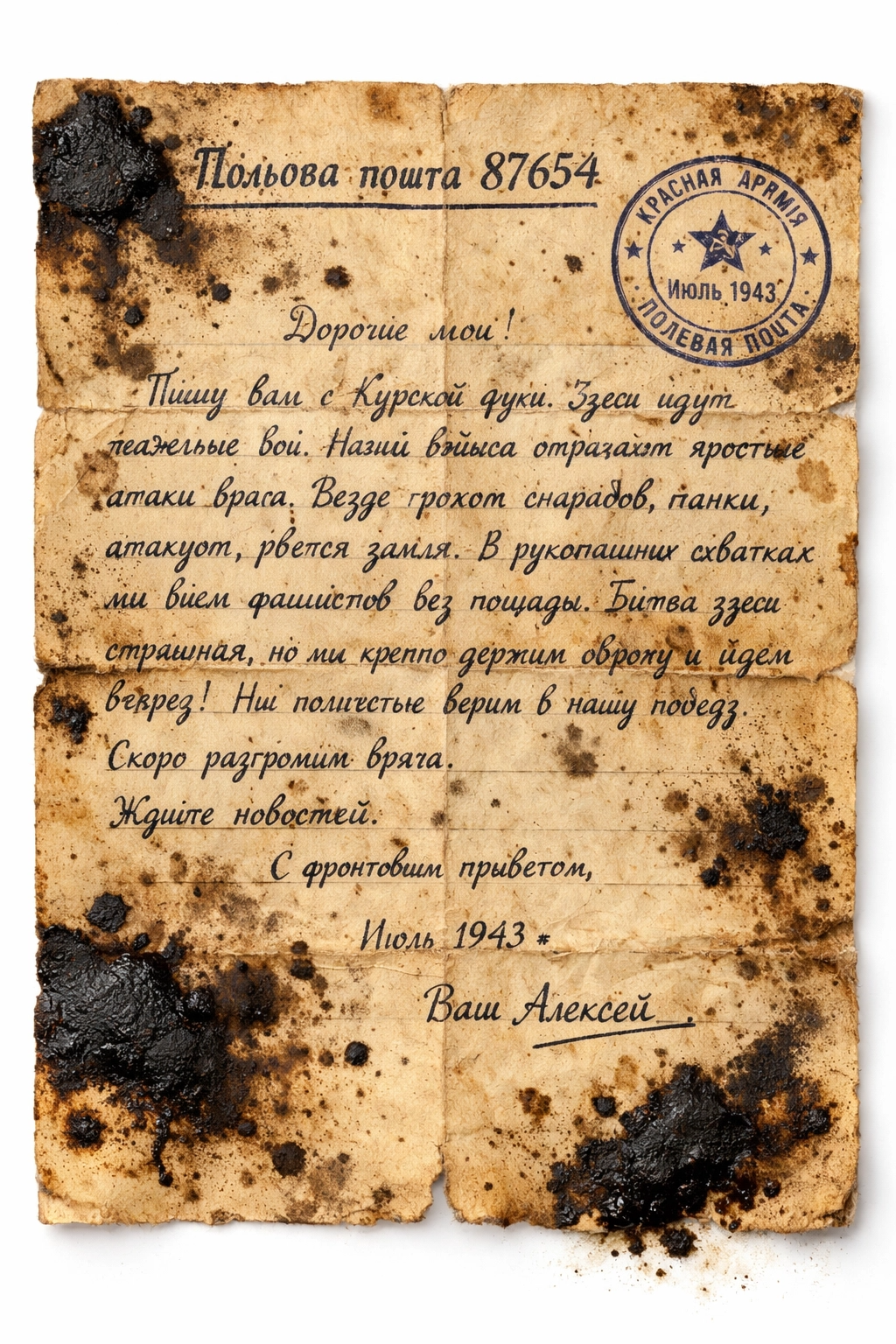
Letter From the Salient Front
1943This 1943 frontline letter, written by a Red Army soldier during the Battle of Kursk, offers a rare and vivid personal account of one of the most decisive engagements of the Second World War. Sent through field mail number 87654, the document bears official military markings and reflects the intense atmosphere of the Eastern Front at a pivotal moment in the conflict.Composed in July 1943, at the height of the fighting on the Kursk salient, the letter describes the ferocity of the battles, the constant thunder of artillery, and the close‑quarters combat that defined the confrontation. The soldier’s words convey determination, exhaustion, and unwavering belief in eventual victory, capturing the emotional and psychological landscape of those who fought in one of history’s largest armored clashes.The partially burnt edges, worn paper, and authentic handwriting enhance the historical depth of the piece, preserving the immediacy of frontline experience. As a personal testimony from a participant in the Battle of Kursk, the letter stands as a powerful artifact of twentieth‑century military history and a compelling example of wartime correspondence from the Eastern Front.A historically significant and emotionally resonant document — ideal for collectors of military ephemera, frontline letters, and key narratives of the Second World War.